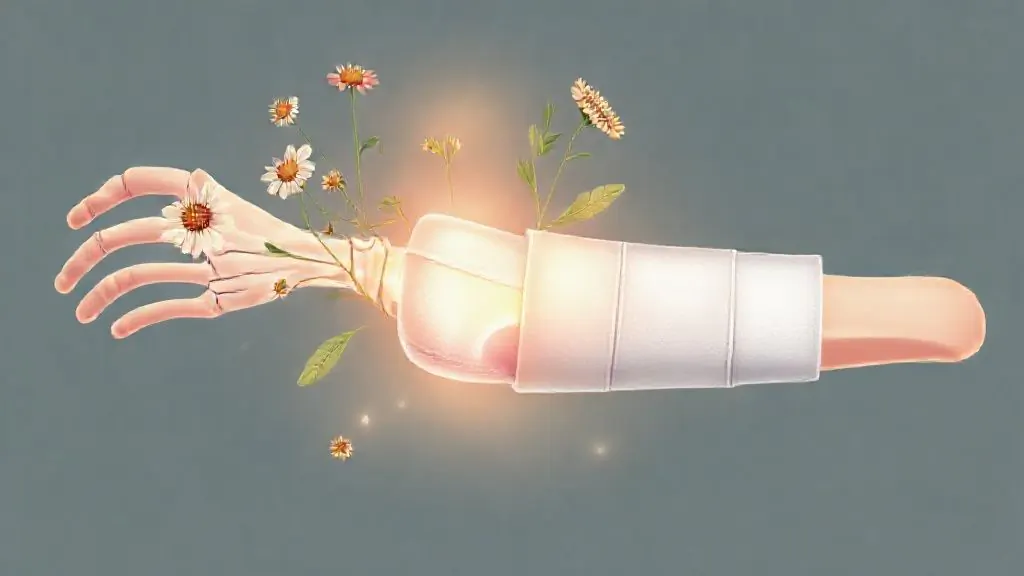
Homeopathy for Fractures and Splints – Complete Guide


Imagine the sudden jolt, the searing pain, and the stark reality of a broken bone. Whether it’s a simple hairline crack or a more complex break, the diagnosis of a fracture, often necessitating a cast or splint, ushers in a period of enforced immobility and often significant discomfort. While conventional medical intervention is indispensable for proper alignment and stabilization of broken bones, many individuals seek additional, natural avenues to manage pain, reduce swelling, and actively support their body’s remarkable capacity for repair.
This article aims to illuminate how homeopathy for fractures can serve as a powerful complementary therapy, working in harmony with conventional care to optimize healing outcomes. We’ll delve into the underlying principles of this holistic approach, exploring how specific homeopathic remedies can gently stimulate the body’s innate natural bone healing processes, offering profound relief from pain and inflammation, promoting accelerated bone union, and fostering a more complete fracture recovery. From the immediate aftermath of the injury to navigating the challenges of immobilization and the crucial rehabilitation phase, you’ll discover how homeopathy can empower and transform your journey back to full mobility. Continue reading to unlock a gentler, more efficient path to healing.
Here are the Main Sections for your article on Homeopathy for Fractures & Splints:
—
Get this at the best price on Amazon
Prices on Amazon change daily — right now this pick is at one of its best prices, with free fast Prime shipping and easy 30-day returns. Check the current price before you buy.
Buy From Amazon As an Amazon Associate I earn from qualifying purchases.
H2: Understanding Fractures & Conventional Treatment: A Foundation for Holistic Care
Fractures are a common injury, disrupting daily life and requiring careful management. Understanding the nature of a fracture and the conventional medical approach forms a crucial foundation for appreciating how complementary therapies like homeopathy can offer significant support.
A. What is a Fracture?
A fracture is simply a break in the continuity of a bone. These breaks can vary widely in severity and type, ranging from a minor crack to a complete shatter. Common types include:
- Simple (Closed) Fracture: The bone breaks but does not pierce the skin.
- Compound (Open) Fracture: The broken bone pierces the skin, creating an open wound, which carries a higher risk of infection.
- Hairline/Stress Fracture: A tiny crack in the bone, often caused by repetitive stress or overuse.
- Greenstick Fracture: A partial break in the bone, common in children whose bones are more flexible.
- Comminuted Fracture: The bone shatters into three or more pieces.
- Oblique, Transverse, Spiral Fractures: Describing the pattern of the break.
Fractures are typically caused by trauma (falls, accidents), but can also result from overuse (stress fractures) or underlying medical conditions that weaken bones, such as osteoporosis.
B. The Natural Bone Healing Process:
The human body possesses an incredible capacity for self-repair, and bone healing is a prime example. This process generally unfolds in three overlapping stages:
- Inflammatory Phase (Days 1-7): Immediately after a fracture, blood vessels rupture, forming a hematoma (blood clot) around the break. Inflammation occurs, clearing away damaged tissue and signaling the start of repair.
- Reparative Phase (Weeks 1-6+): Fibroblasts and osteoblasts (bone-forming cells) move into the area. The hematoma is replaced by a soft callus of cartilage and fibrous tissue, which then gradually mineralizes into a hard callus of woven bone. This phase ensures the bone fragments are bridged and stabilized.
- Remodeling Phase (Months to Years): The hard callus is gradually replaced by stronger, more organized lamellar bone. Osteoclasts (bone-resorbing cells) and osteoblasts work together to reshape the bone back to its original form and strength, adapting to mechanical stresses.
Several factors influence the speed and efficiency of healing, including age (younger heals faster), nutrition (adequate calcium, vitamin D, protein), blood supply to the fracture site, the severity and type of fracture, and overall health.
C. Conventional Medical Management of Fractures:
Conventional medicine plays an indispensable role in diagnosing and managing fractures to ensure proper healing and function.
- Diagnosis: Typically involves X-rays, but MRI or CT scans may be used for more complex fractures or soft tissue injuries.
- Reduction: If the bone fragments are displaced, they must be realigned (reduced). This can be a closed reduction (manipulating the bone externally) or an open reduction (surgical intervention).
- Immobilization: Crucial for allowing the bone to heal without disturbance. This involves casts, splints, braces, or internal fixation (surgical implants like plates, screws, rods).
- Pain Management: Often involves NSAIDs (non-steroidal anti-inflammatory drugs) or, for severe pain, opioids.
- Physical Therapy: Essential during the rehabilitation phase to restore strength, range of motion, and function.
D. Why Seek Complementary Support for Fractures?
While conventional care is vital, it has certain limitations. Medications can have side effects, healing can be prolonged, and the discomfort of immobilization (itching, stiffness, muscle atrophy) can be significant. Patients often experience residual stiffness, pain, or even emotional distress. This is where complementary therapies like homeopathy shine. Homeopathy offers a gentle, non-toxic approach to support the body’s natural healing processes, addressing pain, swelling, emotional impact, and accelerating recovery without interfering with conventional treatment.
H2: The Homeopathic Approach to Fracture & Splint Care: Principles and Benefits
Homeopathy offers a unique and holistic perspective on healing, working in harmony with the body’s innate wisdom. When applied to fractures and splints, it aims to stimulate and support the natural repair mechanisms, addressing the individual’s specific symptoms and overall well-being.
A. Core Principles of Homeopathy in Fracture Healing:
The effectiveness of homeopathy stems from several foundational principles:
Individualization: Unlike a “one-size-fits-all” approach, homeopathy treats the person* with the fracture, not just the fracture itself. A homeopath considers the patient’s unique symptoms, their emotional state, general health, and even personality to select the most appropriate remedy. For example, two people with the same type of wrist fracture might receive different remedies based on their specific pain sensation, accompanying emotional state, and modalities (what makes symptoms better or worse).
Like Cures Like (Similars): This core principle, “Similia Similibus Curentur,” means that a substance that causes certain symptoms in a healthy person can, in highly diluted form, cure similar symptoms in a sick person. For instance, Arnica Montana*, which causes bruising and soreness in large doses, is used homeopathically to treat bruising and soreness from trauma.
- Minimum Dose: Homeopathic remedies are prepared through a process of serial dilution and succussion (vigorous shaking). This results in highly diluted preparations, often to the point where no original molecules remain. The belief is that this process imprints an energetic blueprint that stimulates the body’s vital force to heal, minimizing side effects.
- Vital Force: Homeopathy posits that a subtle, intelligent “vital force” governs health and healing within every individual. When this vital force is disturbed (e.g., by trauma like a fracture), symptoms arise. Homeopathic remedies aim to gently rebalance and strengthen this vital force, allowing the body to restore health from within.
B. Key Benefits of Using Homeopathy for Fractures:
Integrating homeopathy into fracture care can provide a range of significant advantages:
- Pain Relief: Homeopathic remedies are selected to match the specific character of the pain (e.g., sharp, bruising, tearing, burning, shooting), offering targeted and gentle relief without the side effects associated with conventional analgesics.
- Reducing Swelling & Inflammation: Remedies work to minimize tissue damage, reduce fluid accumulation, and improve circulation to the injured area, which can accelerate the resolution of swelling and inflammation.
- Accelerating Bone Union & Healing: Specific remedies are known to promote callus formation, enhance calcium absorption, and support the remodeling phase, potentially speeding up the natural bone healing process and reducing the risk of complications like delayed union.
- Minimizing Complications: By supporting the body’s healing capacity, homeopathy can help address potential complications such as nerve damage, persistent inflammation, and in some cases, even aid in preventing infection (though not a substitute for antibiotics in open fractures).
- Alleviating Discomfort from Splints/Casts: Remedies can address common complaints associated with immobilization, such as itching, pressure sores, muscle cramps, stiffness, and general discomfort caused by the cast or splint.
- Emotional & Mental Support: Fractures are often accompanied by shock, fear, anxiety, frustration, and even depression due to pain, immobility, and uncertainty. Homeopathy excels at addressing these emotional and mental states, supporting the patient’s overall well-being during a challenging time.
H2: Essential Homeopathic Remedies for Fractures & Splints: A Detailed Materia Medica
This section delves into specific homeopathic remedies invaluable for various stages and symptoms associated with fractures and splints. Remember, remedy selection is highly individualized; this guide provides common indications.
A. For Immediate Injury, Shock & Bruising:
- Arnica Montana (Leopard’s Bane)
- Key Indications: The premier first aid remedy for any trauma, injury, shock, bruising, soreness, and muscle strain. Feeling “beaten and bruised” all over. The injured person may insist they are “fine” and push others away, even when clearly hurt.
- Mental/Emotional Picture: Shock, denial of injury, fear of being touched, wants to be left alone.
- Potency Suggestions: 30C or 200C.
Keywords: Arnica Montana for fractures, homeopathic first aid for broken bones, bruising remedy homeopathy, shock after injury homeopathy.*
- Aconitum Napellus (Monkshood)
- Key Indications: For sudden shock, fright, and panic immediately after an injury. Intense, sudden pain with great restlessness and fear of death. Often given in the first few hours if the person is terrified.
- Mental/Emotional Picture: Intense fear, anxiety, restlessness, predicts the time of death, fear of crowds.
- Potency Suggestions: 30C or 200C.
Keywords: Aconitum for shock, fear after injury homeopathy.*
- Hypericum Perforatum (St. John’s Wort)
- Key Indications: Specifically for nerve injuries, crushing injuries to nerve-rich areas (fingers, toes, tailbone, spine). Shooting, darting, or electric-shock-like pains radiating along nerve pathways. Punctured wounds.
- Mental/Emotional Picture: Can be irritable and nervous after injury.
- Potency Suggestions: 30C or 200C.
Keywords: Hypericum for nerve pain fractures, crushing injury homeopathy.*
B. For Periosteal Injuries, Bone Bruises & Slow Healing:
- Ruta Graveolens (Rue)
- Key Indications: Essential for injuries to the periosteum (the membrane covering the bone), tendons, ligaments, and cartilage. Deep soreness, lameness, stiffness, especially after overuse, sprains, or trauma where bones feel bruised. Great for discomfort from splints or casts, feeling of bruising and aching in the immobilized limb.
- Mental/Emotional Picture: Dissatisfied, fault-finding, anxious.
- Potency Suggestions: 30C.
Keywords: Ruta Graveolens for periosteum injury, homeopathic remedy for tendon injury, bone bruise homeopathy, splint discomfort homeopathy.*

- Symphytum Officinale (Comfrey / Knitbone)
- Key Indications: The paramount bone-knitter. Indicated for promoting callus formation and accelerating bone union. Excellent for non-union or delayed union of fractures, and for piercing, pricking, or stitching pain at the fracture site. Can be used after Arnica has addressed initial bruising and shock.
- Mental/Emotional Picture: Not highly characteristic, focus on physical symptoms.
- Potency Suggestions: 6C, 30C.
Keywords: Symphytum for bone healing, homeopathic bone knitter, non-union fractures homeopathy, speed up bone healing with Symphytum.*
C. For Pain, Swelling & Inflammation During Immobilization:
- Bryonia Alba (Wild Hops)
Key Indications: For sharp, stitching, tearing pains that are much worse by any movement and better by absolute rest and firm pressure*. Dryness of mucous membranes, great thirst for large quantities of water.
- Mental/Emotional Picture: Irritable, wants to be left alone, fears poverty, anxious about business.
- Potency Suggestions: 30C.
Keywords: Bryonia for sharp fracture pain, pain worse by movement homeopathy.*
- Bellis Perennis (Daisy)
- Key Indications: Deeper acting than Arnica for contusions, especially to soft tissues, abdomen, and pelvis. Often used for injuries to glands or deeper internal bruising. Sore, bruised feeling, especially after surgery or deep tissue trauma.
- Mental/Emotional Picture: Can be irritable and easily fatigued.
- Potency Suggestions: 30C.
Keywords: Bellis Perennis for deep bruising, soft tissue injury homeopathy.*
- Ledum Palustre (Marsh Ledum)
- Key Indications: For puncture wounds, bites (useful for compound fractures with skin puncture), and coldness of the injured part. Swelling with discoloration, often purplish. Pain better by cold applications.
- Mental/Emotional Picture: Sullen, discontented.
- Potency Suggestions: 30C.
Keywords: Ledum for puncture wounds, compound fracture homeopathy.*
- Calendula Officinalis (Marigold)
- Key Indications: Primarily used topically (tincture or cream) for open wounds to prevent infection, promote healthy granulation, and encourage healing. Can also be used internally (low potency) for similar purposes.
- Mental/Emotional Picture: Not typically used for emotional symptoms.
- Potency Suggestions: Topical tincture/cream; 6C or 30C internally for wound healing.
Keywords: Calendula for open fractures, wound healing homeopathy.*
D. For Post-Immobilization & Rehabilitation (Stiffness, Weakness):
- Rhus Toxicodendron (Poison Ivy)
Key Indications: For stiffness, lameness, soreness that is worse on first motion but improves with continued gentle motion*. Restlessness, desire to change position frequently. Worse in cold, damp weather; better by warmth and rubbing. Often indicated after cast removal.
- Mental/Emotional Picture: Restless, anxious, superstitious, fear of poisoning.
- Potency Suggestions: 30C.
Keywords: Rhus Tox for stiffness after fracture, post-cast removal stiffness homeopathy, lameness after injury homeopathy.*
- Calcarea Phosphorica (Calcium Phosphate)
- Key Indications: For slow or incomplete bone healing, non-union, or when bones are slow to mend. Helps the body absorb and utilize calcium. Indicated for weakness, debility, and a general feeling of not being well. Useful in growing children or individuals with poor nutrition.
- Mental/Emotional Picture: Discontented, restless, desires change.
- Potency Suggestions: 6X or 12X (biochemic cell salt), 30C.
Keywords: Calcarea Phos for slow bone healing, non-union fractures homeopathy, homeopathic support for calcium absorption.*
- Silica (Silicea Terra)
- Key Indications: For slow healing, chronic conditions, lack of vital heat, and weakness of connective tissue. Can help expel splinters or foreign bodies (e.g., bone fragments). Useful when non-union persists despite other remedies.
- Mental/Emotional Picture: Timid, yielding, lack of self-confidence, wants to avoid exertion.
- Potency Suggestions: 30C or 200C.
Keywords: Silica for slow healing fractures, homeopathic remedy for chronic bone issues.*
- Causticum
- Key Indications: For stiffness, contractures, paralysis, and nerve weakness, especially after trauma or prolonged immobilization. Useful for burning, rawness, and soreness. Often helps with residual weakness and difficulty regaining full mobility.
- Mental/Emotional Picture: Sympathetic, easily saddened, anxious, especially about others.
- Potency Suggestions: 30C.
Keywords: Causticum for stiffness and contractures, nerve weakness after fracture homeopathy.*
Comparison Table: Key Remedies by Symptom Focus
| Symptom Focus | Primary Remedy | Secondary/Complementary Remedies | Key Differentiating Features |
|---|---|---|---|
| Initial Trauma/Bruising | Arnica Montana | Aconitum, Bellis Perennis | Arnica: “Beaten & bruised,” denies injury; Aconitum: fear/panic. |
| Nerve Pain | Hypericum Perforatum | Causticum, Ruta | Hypericum: shooting/electric pain; Causticum: weakness/contractures. |
| Periosteal/Ligament | Ruta Graveolens | Symphytum, Rhus Tox | Ruta: deep bone bruise, lameness; Symphytum: bone knitting focus. |
| Bone Healing/Union | Symphytum Officinale | Calcarea Phos, Silica | Symphytum: direct bone knitting; Calc Phos: slow healing, calcium. |
| Stiffness/Mobility | Rhus Toxicodendron | Causticum, Ruta | Rhus Tox: worse initial movement, better continued movement. |
| Sharp, Worse Movement Pain | Bryonia Alba | Bryonia: absolute rest improves, stitching pains. |
H2: Specific Applications: Homeopathic Care Through the Fracture Journey
Homeopathy can be strategically applied at every stage of fracture recovery, from the immediate aftermath to long-term rehabilitation. The key is to select remedies based on the evolving symptom picture.
A. Immediate Post-Injury (First 24-72 hours):
This critical phase focuses on managing shock, acute pain, bruising, and preventing initial complications.
- Focus: Alleviate shock, reduce pain and swelling, minimize bruising, and prepare the body for healing.
- Remedies:
- Arnica Montana 30C or 200C: The essential first remedy. Take 1 pellet every 1-2 hours for the first 6-8 doses, then 3 times a day for 2-3 days, or until significant improvement in bruising and soreness.
- Aconitum Napellus 30C or 200C: If there’s intense fear, panic, and restlessness immediately after the injury. Take 1 pellet every 30-60 minutes for 3-4 doses, then as needed if fear returns.
- Hypericum Perforatum 30C: If there’s significant nerve involvement (e.g., crushed finger, tailbone injury) with shooting pains. Take 1 pellet 3 times a day for several days.
- Step-by-step instructions:
- Immediately after the injury, if the person is in shock or pain, administer Arnica Montana.
- If extreme fear or panic is present, alternate or follow with Aconitum.
- If nerve pain is a prominent feature, add Hypericum.
- Continue with Arnica for general bruising and soreness for a few days.
Common Mistake: Relying solely on Arnica for all* initial symptoms, missing the specific indications for Aconitum or Hypericum.
Case Study: Sarah’s Tibia Fracture
Sarah, a 32-year-old active runner, suffered a severe fall during a trail run, resulting in a displaced fracture of her tibia. She experienced immediate, excruciating pain, visible deformity, and profound shock.
- Initial Presentation: Pale, trembling, extremely anxious, unable to bear weight, felt faint, insisted she was “fine” despite obvious distress.
- Conventional Treatment: Emergency services transported her to the hospital. X-rays confirmed a displaced tibia fracture. She received pain medication and the bone was successfully reduced and immobilized in a cast.
- Homeopathic Support:
- Immediate Post-Injury (in ER): Sarah’s husband, knowledgeable in homeopathy, gave her Arnica Montana 200C (1 pellet). Within 30 minutes, her extreme trembling subsided slightly, and she was less agitated about being touched. He repeated the dose after 2 hours.
- Post-Reduction/Casting (Day 1-3): She continued Arnica Montana 30C, 1 pellet three times a day, to manage the intense bruising and general soreness. Her husband also noted she was very restless and anxious about the long recovery, so he gave her Aconitum Napellus 30C, 1 pellet twice a day for the first day, which helped calm her intense fear.
During Immobilization (Weeks 1-8): Sarah developed deep aching and a bruised sensation under* the cast, particularly around the fracture site, which worsened with any movement. She also felt a constant, deep ache in the periosteum. Her homeopath prescribed Ruta Graveolens 30C, 1 pellet twice a day, which significantly eased the deep aching and discomfort from the cast. After 2 weeks, her homeopath introduced Symphytum Officinale 6C, 1 pellet twice a day, specifically to promote bone healing and callus formation.
- Post-Cast Removal (Week 9 onwards): Upon cast removal, Sarah experienced severe stiffness, particularly on first movement, which gradually improved with gentle walking. Her homeopath prescribed Rhus Toxicodendron 30C, 1 pellet twice a day, for this stiffness. She also started physical therapy. After a month, her physical therapist noted slow progress in bone density, so her homeopath added Calcarea Phosphorica 6X, 4 tablets twice a day, to support calcium absorption and bone strengthening.
- Outcome: Sarah’s recovery was remarkably smooth. She experienced less pain and swelling throughout the process than anticipated, and her emotional state remained stable. X-rays at 12 weeks showed excellent callus formation and strong bone union, exceeding her surgeon’s initial expectations for recovery time. She returned to gentle running within 6 months.
B. During Immobilization (Splint/Cast Phase):
This phase focuses on pain, swelling, discomfort from immobilization, and supporting the ongoing bone repair.
- Focus: Reduce inflammation, manage pain, alleviate cast-related discomfort, and promote robust callus formation.
- Remedies:
- Ruta Graveolens 30C: For deep bone bruises, periosteal pain, and discomfort from the cast (e.g., pressure, aching). Take 1 pellet twice a day.
- Symphytum Officinale 6C or 30C: The primary remedy for promoting bone union. Start once initial acute inflammation subsides (typically after 3-7 days). Take 1 pellet twice a day, consistently throughout the immobilization period.
Bryonia Alba 30C: If pain is sharp, stitching, and worse by any movement*, with a desire for absolute rest. Take 1 pellet 2-3 times a day as needed.
Rhus Toxicodendron 30C: If there’s restless pain in the cast* that feels better with slight movement or changing position, or general stiffness. Take 1 pellet twice a day as needed.
- Bellis Perennis 30C: For deep bruising and soreness, especially in soft tissues around the fracture. Take 1 pellet twice a day.
- Addressing itching, pressure points, muscle cramps:
- Sulphur 30C: For intense itching under the cast, especially if worse from warmth. Take 1 pellet once a day for a few days.
- Cuprum Metallicum 30C: For severe muscle cramps and spasms. Take 1 pellet as needed.
- Step-by-step instructions:
- After the initial acute phase, transition to Symphytum to actively promote bone healing.
- Address specific symptoms as they arise: Ruta for deep aches and cast discomfort, Bryonia for sharp, motion-sensitive pain, Rhus Tox for restless stiffness.
- For itching or cramps, use specific remedies as indicated.
- Timeframes: Symphytum should be continued daily throughout the entire immobilization period, often for 6-8 weeks or longer, depending on the fracture. Other remedies are taken as needed for specific symptoms.
- Common Mistake: Stopping Symphytum too early. It’s a key remedy for the entire healing process.
C. Promoting Bone Union & Addressing Healing Challenges:
This stage focuses on ensuring strong callus formation and addressing any delays in healing.
- Focus: Accelerate bone consolidation, prevent delayed union, and address non-union.
- Remedies:
- Symphytum Officinale 30C: Continue daily for robust bone knitting.
- Calcarea Phosphorica 6X or 30C: For slow or incomplete bone healing, non-union, or general weakness. Helps with calcium metabolism. Take 4 tablets of 6X twice a day, or 1 pellet of 30C twice a day. Can be used alongside Symphytum.
- Calcarea Fluorica 6X or 30C: For hard, bony growths (exostoses), slow-healing bones, or weakness of elastic tissue. Take 4 tablets of 6X twice a day, or 1 pellet of 30C twice a day.
- Silica 30C or 200C: If healing is persistently slow, or if there’s a tendency for pus formation or chronic bone issues. Take 1 pellet daily for several days, then less frequently.
- Step-by-step instructions:
- If X-rays show slow callus formation or delayed union, consider adding Calcarea Phosphorica and/or Calcarea Fluorica to Symphytum.
- For very stubborn non-union, especially in thin, debilitated individuals, Silica may be indicated under professional guidance.
- Timeframes: These remedies may be needed for several weeks to months, often until radiological evidence confirms strong union.
- Common Mistake: Not being patient enough with remedies for slow healing. Bone repair takes time, and remedies need consistent administration.
D. Post-Splint/Cast Removal & Rehabilitation:
This phase addresses residual stiffness, weakness, pain, and regaining full mobility.
- Focus: Restore flexibility, reduce residual pain, strengthen muscles, and improve range of motion.
- Remedies:
Rhus Toxicodendron 30C: For stiffness, lameness, and soreness that is worse on first motion but improves with continued gentle movement*. This is very common after immobilization. Take 1 pellet 2-3 times a day as needed.
- Ruta Graveolens 30C: If there’s continued deep aching, bruised sensation in the bones or tendons, or stiffness in ligaments. Take 1 pellet twice a day.
- Causticum 30C: For persistent stiffness, contractures, nerve weakness, or difficulty extending the limb fully. Burning pains. Take 1 pellet twice a day.
- Calcarea Phosphorica 30C or 6X: If there’s general weakness, poor muscle tone, or lingering bone weakness. Take 1 pellet twice a day or 4 tablets of 6X twice a day.
- Hypericum Perforatum 30C: For any residual nerve pain, tingling, or numbness. Take 1 pellet twice a day.
- Step-by-step instructions:
- Start with Rhus Tox as the primary remedy for post-immobilization stiffness.
- Add Ruta if deep bone/tendon aches persist.
- Consider Causticum if stiffness progresses to contractures or nerve weakness.
- Continue Calcarea Phos if general weakness or bone density issues are present.
- Timeframes: These remedies can be used for several weeks to months during the rehabilitation period, adjusting frequency as symptoms improve.
- Common Mistake: Not integrating physical therapy. Homeopathy supports the body, but physical movement is essential to rebuild strength and flexibility.
E. Addressing Emotional & Mental Aspects:
The emotional toll of a fracture can be significant. Homeopathy offers gentle support for common feelings.
- Focus: Alleviate anxiety, fear, frustration, depression, and improve sleep.
- Remedies:
- Ignatia Amara 30C: For grief, disappointment, mood swings, sighing, and emotional sensitivity, especially after a sudden shock or loss of mobility.
- Pulsatilla 30C: For tearfulness, weepiness, needing comfort and consolation, feeling abandoned or helpless. Symptoms are changeable.
- Gelsemium 30C: For weakness, trembling, apprehension, stage fright, or fear of the unknown regarding recovery.
- Aconitum Napellus 30C: For acute fear, panic, or nightmares, especially related to the original trauma.
- Nux Vomica 30C: For irritability, impatience, anger, frustration with confinement, and inability to work.
- Step-by-step instructions:
- Observe the predominant emotional state. Select the remedy that best matches the overall picture.
- Take 1 pellet 1-2 times a day, or as needed for acute emotional distress.
- Timeframes: These remedies are taken as needed for emotional support, potentially for the entire recovery period.
- Common Mistake: Neglecting the emotional impact. Addressing mental and emotional well-being is crucial for holistic healing.
H2: Holistic Support & Adjunctive Therapies for Optimal Bone Healing
Homeopathy works synergistically with a holistic approach to accelerate and strengthen bone healing. Optimal recovery extends beyond just remedies to encompass nutrition, lifestyle, and physical rehabilitation.
A. Nutritional Support for Bone Health:
Bones require a steady supply of specific nutrients to repair and remodel effectively.
- Calcium: The primary building block of bone. Dairy, leafy greens (kale, spinach), fortified plant milks, sardines.
- Vitamin D3: Essential for calcium absorption. Sun exposure, fatty fish, fortified foods.
- Vitamin K2: Directs calcium to the bones and away from arteries. Fermented foods (natto, sauerkraut), grass-fed dairy, egg yolks.
- Magnesium: Crucial for bone structure and activating Vitamin D. Nuts, seeds, dark chocolate, leafy greens.
- Phosphorus: Another key component of bone. Meat, fish, dairy, nuts.
- Protein: Provides the collagen matrix upon which bone minerals are laid. Lean meats, eggs, legumes, nuts, seeds.
- Silica-rich foods: Horsetail tea, oats, barley, bell peppers can support connective tissue and bone health.
Ensure a diet rich in whole, unprocessed foods. Consider high-quality supplements under professional guidance, especially for Vitamin D and K2.
B. Lifestyle & Self-Care:
- Adequate Rest: Healing is energy-intensive. Prioritize sleep and rest to allow the body to dedicate resources to repair.
- Hydration: Water is vital for all bodily functions, including nutrient transport and waste removal.
- Gentle Movement: As advised by your medical professional and physical therapist, incorporating gentle, appropriate movement helps stimulate blood flow and prevent stiffness, without stressing the fracture.
- Mindfulness & Stress Reduction: Chronic stress can impair healing. Practices like meditation, deep breathing, or gentle yoga (if cleared by your doctor) can promote relaxation and well-being.
C. Importance of Physical Therapy:
Physical therapy is an indispensable component of fracture recovery, working hand-in-hand with homeopathic support. A qualified physical therapist will guide you through exercises to:
- Restore range of motion.
- Strengthen weakened muscles.
- Improve balance and coordination.
- Reduce stiffness and pain.
Homeopathy can help mitigate pain and stiffness, making physical therapy sessions more comfortable and effective, thereby accelerating the rehabilitation process.
H2: Practical Considerations: How to Use Homeopathy Safely and Effectively
While homeopathy offers gentle support, its safe and effective use requires careful attention to specific guidelines and an understanding of its complementary role.
A. The Importance of Professional Guidance:
- Always consult a qualified homeopath: While this article provides general information, individualized remedy selection, potency, and dosage are best determined by a professional homeopath. They can take a comprehensive case, considering all your symptoms and medical history, to tailor a treatment plan specifically for you.
- Do not self-prescribe for complex fractures: For serious injuries like displaced fractures, a professional homeopath can provide more nuanced guidance and integrate homeopathic care seamlessly with your conventional medical treatment.
H2: Frequently Asked Questions About Homeopathy for Fractures & Splints
Here are some common questions people ask about using homeopathy to support fracture healing and recovery:
Q: Can homeopathy replace a cast or other conventional medical treatment for a broken bone?
A: Absolutely not. Homeopathy is a complementary therapy and should never replace essential conventional care like proper diagnosis, bone realignment (reduction), and immobilization with a cast or splint. These medical steps are crucial for ensuring your bone heals correctly and safely. Homeopathy works alongside these treatments to support your body’s natural healing process.
Q: How quickly can homeopathy help speed up the healing of a fracture?
A: While individual healing times vary, many people find that well-chosen homeopathic remedies can significantly support and even accelerate the body’s natural bone repair. Remedies like Symphytum, often called “bone knitters,” can encourage faster and stronger callus formation. This can potentially lead to a quicker, more robust recovery when integrated with your conventional medical care.
Q: Is it safe to use homeopathic remedies alongside my prescribed pain medication or other conventional treatments?
A: Yes, generally, homeopathic remedies are highly diluted and considered safe to use alongside conventional medications without causing interference or side effects. They work by stimulating your body’s innate healing capacity, rather than through chemical interactions. However, it’s always a good practice to inform both your medical doctor and your homeopath about all treatments you are receiving.
Q: Can homeopathy really help with the pain and swelling from a broken bone?
A: Many people find homeopathy incredibly effective for managing symptoms like pain and swelling associated with fractures. Remedies such as Arnica are excellent for reducing initial bruising and soreness, while others can address specific types of pain like sharp, stitching sensations. This can provide significant comfort throughout your recovery, often without the side effects of conventional pain relievers.
Q: What about the stiffness and weakness I might experience after my cast or splint is removed?
A: Homeopathy can be wonderfully supportive during the post-immobilization and rehabilitation phase. Remedies like Rhus Toxicodendron can help alleviate stiffness that improves with gentle movement, and Ruta Graveolens is often indicated for soreness in tendons and ligaments. Using these remedies can effectively complement your physical therapy, helping you regain strength and mobility more quickly.
Conclusion
As we’ve explored throughout this comprehensive guide, incorporating homeopathy into your fracture and splint care offers a profound and holistic path to natural bone healing and recovery. We’ve seen how these gentle yet powerful remedies can significantly support your body’s innate ability to mend, from alleviating immediate pain and reducing swelling to accelerating bone union and providing crucial emotional comfort during a challenging time.
Remember, your healing journey is unique, and while conventional medical care provides the essential framework for proper diagnosis and immobilization, homeopathy steps in as a powerful complementary ally. It empowers your body’s vital force, addressing not just the physical symptoms but also the mental and emotional aspects of recovery. Embracing this integrated approach means you’re actively supporting every facet of your well-being.
We warmly encourage you to open a dialogue with your primary healthcare provider about your interest in complementary therapies, and most importantly, to seek the guidance of a qualified homeopath. They can help tailor a personalized remedy plan that supports your optimal recovery, naturally and effectively, guiding you towards renewed strength and mobility. You deserve every tool available to heal completely and thrive.