Kali Bichromicum 30, 200, Q, 1M – Uses, Benefits & Side Effects


Introduction to Kali Bichromicum
Kali Bichromicum, commonly known as Kali Bich or Potassium Bichromate, is one of the most widely prescribed homeopathic remedies in the world. Derived from potassium dichromate (K2Cr2O7), this remedy has earned a prominent place in classical homeopathy due to its remarkable effectiveness in treating conditions involving thick, stringy, and tenacious mucus discharges. Whether you are dealing with chronic sinusitis, post-nasal drip, allergic rhinitis, or deep-seated respiratory issues, Kali Bichromicum is often considered a go-to remedy by homeopathic practitioners.
This in-depth guide covers everything you need to know about Kali Bichromicum 30, Kali Bichromicum 200, Kali Bichromicum Q (Mother Tincture), and Kali Bichromicum 1M — including their specific uses, therapeutic benefits, recommended dosages, and potential side effects. Whether you are a first-time user or an experienced homeopathy enthusiast, this article will serve as your complete reference.


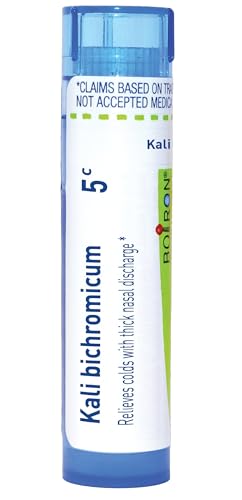
What Is Kali Bichromicum? Origin and Preparation
Kali Bichromicum is prepared from potassium dichromate, an inorganic compound that in its crude form is toxic and corrosive. Through the homeopathic process of serial dilution and succussion (potentization), the remedy is rendered safe while retaining — according to homeopathic principles — the energetic imprint of the original substance.
The remedy was introduced into homeopathic practice in the early 19th century and has been extensively proven to establish its symptom profile. It appears in the major homeopathic materia medicas of Hahnemann, Hering, Boericke, Kent, and Clarke. Today it is manufactured and dispensed in a range of potencies to address conditions of varying depth and chronicity.
Get this at the best price on Amazon
Prices on Amazon change daily — right now this pick is at one of its best prices, with free fast Prime shipping and easy 30-day returns. Check the current price before you buy.
Buy From Amazon As an Amazon Associate I earn from qualifying purchases.| Key Fact: Kali Bichromicum is most distinguished by its action on mucous membranes throughout the body — particularly the nose, throat, sinuses, larynx, stomach, and intestines — producing characteristic tough, ropy, sticky, yellowish-green discharges. |
Key Characteristics and Symptom Profile
Understanding the characteristic symptom picture of Kali Bichromicum is essential for correct homeopathic prescribing. The hallmark features include:
- Thick, stringy, ropy, greenish-yellow mucus that can be drawn into long strings
- Pain that moves from place to place (wandering or shifting pains)
- Symptoms that occur in small, well-defined spots or patches
- Complaints that alternate — e.g., gastric symptoms alternate with respiratory symptoms
- Worse in the morning, in cold weather, and after eating
- Better from warmth, heat, and motion
- Dryness of mucous membranes alternating with thick mucus secretion
- Deep-seated, boring pains in bones and sinuses
The constitutional type associated with Kali Bich is often described as a fair, chilly, fleshy individual with a tendency toward catarrhal conditions. These patients may have a history of chronic sinus infections, frequent colds, or a family tendency toward respiratory conditions.
Kali Bichromicum – Therapeutic Uses
1. Sinusitis and Nasal Congestion
Kali Bichromicum is arguably the most important homeopathic remedy for sinusitis. It targets all sinuses and is indicated when there is thick, tenacious, greenish-yellow nasal discharge, post-nasal drip, pressure at the root of the nose, and a sensation of obstruction that worsens on waking. The nasal mucus may come out in plugs or elastic strings. Patients often report loss of smell and difficulty breathing through the nose.
2. Allergic Rhinitis and Hay Fever
For seasonal allergies with characteristic thick or stringy nasal discharge, violent sneezing in the morning, and watery discharge that later thickens, Kali Bich is frequently prescribed. It helps reduce hypersensitivity of the nasal mucous membranes and controls excessive mucus secretion associated with allergic reactions.
3. Chronic Cough and Bronchitis
Kali Bichromicum is an important remedy for chronic bronchitis and laryngitis. The cough is typically deep, rough, and brassy, with expectoration of thick, tough, yellowish-green mucus. The patient may wake at 2–3 AM with a suffocative cough, and symptoms are often worse in cold, damp weather.
4. Otitis Media and Ear Infections
When ear infections are accompanied by thick, ropy discharge from the ear canal, Kali Bich is indicated. It is useful in chronic otitis media, particularly where there is a feeling of fullness or blockage in the ears linked to eustachian tube congestion due to excess mucus.
5. Gastric and Digestive Disorders
Kali Bich has a significant action on the stomach and digestive tract. It is used for gastric ulcers, nausea, and vomiting of stringy mucus. Symptoms include a feeling of heaviness and pressure shortly after eating, heartburn, and mucus-laden stools.
6. Headache and Migraine
Periodic, blinding headaches — especially frontal sinus headaches — with nausea are well within Kali Bich territory. The headache is often preceded by visual disturbances, and the pain may be located over one eye or in small spots on the scalp.
7. Rheumatic and Joint Pains
The wandering nature of pain in Kali Bich makes it useful for rheumatic conditions where pain shifts rapidly from joint to joint. It is also indicated in fibrous tissue inflammations and heel pain. The pains are worse in cold weather and better with warmth and motion.
8. Skin Conditions
Kali Bich is prescribed for skin ulcers with well-defined edges, eczema with thick crusts, psoriasis, and acne with deep-seated pustules. Skin symptoms may alternate with respiratory or gastric symptoms — a key indicator for choosing this remedy.
Kali Bichromicum 30, 200, Q & 1M – Potency Comparison
Choosing the right potency is as important as selecting the correct remedy. The following table provides a clinical overview of each potency:
| Potency | Condition Severity | Typical Dosage | Best Used For |
| Kali Bich 30 | Mild to moderate | 3-4 times/day | Acute conditions, beginners |
| Kali Bich 200 | Moderate to chronic | Once or twice/day | Recurring sinusitis, catarrh |
| Kali Bich Q | Topical / supportive | As directed | External or adjunct use |
| Kali Bich 1M | Deep constitutional | Single dose, rarely | Chronic, stubborn cases |
Kali Bichromicum 30 – Uses, Benefits, and Dosage
Kali Bichromicum 30C is the most commonly recommended potency for general and acute use. It is widely available and considered safe for self-prescribing under basic homeopathic guidelines.
Primary Uses of Kali Bich 30
- Acute sinusitis with thick yellow-green nasal discharge
- Common cold transitioning from thin watery to thick mucus discharge
- Acute bronchitis with productive cough of stringy mucus
- Frontal headaches with sinus pressure
- Early-stage stomach complaints with mucus and bloating
Dosage
For acute conditions, the standard recommendation is 2–3 pellets dissolved under the tongue, taken 3–4 times daily. Once significant improvement is noticed, the frequency should be reduced. Homeopathic remedies follow the principle of minimum dose — once the body responds, further dosing may cause an aggravation.
Kali Bichromicum 200 – Uses, Benefits, and Dosage
Kali Bichromicum 200C is a higher potency used for more persistent, recurring, or moderately chronic conditions. It acts deeper and longer than the 30C potency and is generally prescribed by a qualified practitioner.
Primary Uses of Kali Bich 200
- Chronic recurrent sinusitis that keeps returning despite treatment
- Post-nasal drip lasting weeks or months
- Chronic bronchitis in individuals with a clear constitutional picture
- Recurring ear infections with mucus-related blockage
- Gastric ulcers with characteristic punched-out appearance
Dosage
Kali Bich 200 is typically taken once or twice daily, or even once every few days. A single dose of 3–5 pellets may be sufficient, with a waiting period of several days to assess the response before repeating. Frequent repetition without guidance is not advisable.
Kali Bichromicum Q (Mother Tincture) – Uses and Dosage
The Q potency (Mother Tincture, designated MT or O) is the base preparation containing the highest concentration of the original substance in homeopathic form. It is used externally or internally in diluted form under clinical supervision.
Primary Uses
- Topical application for skin ulcers and deep-seated skin conditions
- Supportive internal therapy in low doses for digestive complaints
- Used in some practices as a gargle (highly diluted) for throat mucus
Dosage
Mother tincture is typically used at 5–10 drops diluted in half a cup of water, taken 2–3 times daily as directed. For topical use, it must always be diluted. Given its higher concentration, self-prescribing with the mother tincture is not recommended.
| Important: Kali Bichromicum Q (Mother Tincture) should NEVER be applied directly to mucous membranes or open wounds in undiluted form. Always dilute as per a practitioner’s instruction. |
Kali Bichromicum 1M – Uses, Benefits, and Dosage
Kali Bichromicum 1M is a very high potency (1,000 centesimal) used exclusively for deep constitutional treatment of long-standing, chronic conditions. This potency should only be administered by an experienced homeopathic practitioner.
Primary Uses
- Stubborn, deeply entrenched chronic sinusitis unresponsive to lower potencies
- Constitutional treatment of patients with a strong Kali Bich type picture
- Long-standing gastric ulcers with systemic involvement
- Chronic recurrent respiratory conditions with well-established constitutional features
Dosage
At this potency, a single dose is usually prescribed and the patient is observed over days to weeks for the healing response. Repetition is rare and only considered if improvement halts. This is strictly a prescription potency under professional guidance.
Overall Benefits of Kali Bichromicum in Homeopathy
When correctly prescribed based on the individual symptom picture, Kali Bichromicum offers a range of therapeutic benefits:
- Reduces thick, tenacious mucus secretion from all mucous membranes
- Provides relief from sinus pressure and headache linked to congestion
- Improves respiratory function in chronic bronchitis and asthma with mucus congestion
- Supports healing of gastric ulcers and soothes the digestive mucosa
- Reduces frequency and intensity of recurring infections in susceptible individuals
- Acts on the immune system to reduce chronic hypersensitivity and catarrhal tendencies
- Offers a non-antibiotic approach to managing recurrent infections
- Can be safely combined with conventional treatment under professional guidance
Side Effects and Safety Considerations
Homeopathic Aggravation
In some individuals — particularly those who are highly sensitive — an initial temporary worsening of symptoms (homeopathic aggravation) may occur. This is usually brief and considered a positive sign that the remedy has acted. It should resolve within 24–48 hours. If it persists or is severe, discontinue and consult a practitioner.
Potency-Related Caution
Higher potencies (200C, 1M) carry a greater risk of aggravation and deeper action. Repeated, indiscriminate dosing at high potencies can produce proving symptoms — the very symptoms the remedy is meant to cure.
Interaction with Conventional Medicine
While generally compatible with allopathic medicines, some practitioners advise avoiding camphor, coffee, and certain aromatic products that are believed to antidote homeopathic remedies. Always inform your physician if you are using homeopathic remedies concurrently.
Pregnancy and Children
Kali Bichromicum is generally regarded as safe for use in pregnancy and children at the 30C potency, but it is best to consult a qualified homeopath before use. Dosing for children typically involves the same pellet count but reduced frequency.
When to Seek Medical Attention
Homeopathy should complement — not replace — emergency or urgent medical care. If symptoms include high fever, difficulty breathing, chest pain, or signs of serious infection, seek immediate conventional medical attention.
How to Choose the Right Potency
- For acute, short-duration conditions. The ideal starting point for most first-time users. Kali Bich 30:
- For conditions lasting several weeks to months, or recurring regularly. Seek practitioner advice. Kali Bich 200:
- For specific topical or adjunct internal use under supervision. Kali Bich Q:
- For deep, long-standing constitutional conditions only, exclusively under professional care. Kali Bich 1M:
| Clinical Tip: The strength of a homeopathic prescription lies not in the potency alone but in the match between the remedy’s symptom picture and the patient’s totality of symptoms. An accurately chosen 30C can outperform a poorly chosen 1M. |
Frequently Asked Questions (FAQs)
Q: Can I take Kali Bich 30 daily for sinusitis?
Yes, Kali Bich 30 can be taken daily for acute sinusitis, typically 3–4 times a day. Once symptoms improve, reduce the frequency. Do not continue indefinitely without reassessment.
Q: Is Kali Bichromicum effective for nasal polyps?
Kali Bich is frequently included in homeopathic protocols for nasal polyps, especially when accompanied by thick, stringy mucus and difficulty breathing. It is generally used alongside other indicated remedies and under professional guidance.
Q: Can Kali Bich 200 be taken without a doctor’s advice?
While some experienced users self-prescribe 200C potencies, it is advisable to consult a qualified homeopath before using potencies above 30C. Higher potencies can produce stronger reactions and require a more precise symptom match.
Q: How long does Kali Bichromicum take to work?
In acute conditions, improvement is often noticed within a few hours to 1–2 days when the remedy is well-indicated. For chronic conditions, results may take several days to weeks. Always monitor response and adjust as needed.
Q: Is Kali Bichromicum the same as Potassium Bichromate?
Yes, Kali Bichromicum is the homeopathic preparation derived from potassium dichromate (potassium bichromate, K2Cr2O7). In its crude form this compound is toxic; homeopathic potentization renders it safe for therapeutic use.
Conclusion
Kali Bichromicum stands out as one of the most targeted and effective remedies in the homeopathic pharmacopoeia for conditions involving the mucous membranes. From the widespread accessibility of Kali Bich 30 for everyday acute sinus complaints to the deep constitutional action of Kali Bich 1M for chronic conditions, this remedy offers a broad therapeutic range when correctly matched to the patient’s symptoms.
The key to successful treatment lies in individualization. The thick, stringy, ropy discharge; the wandering pains; the periodicity; and the characteristic modalities (worse in cold, better from warmth) are the guiding compass for the prescribing practitioner. Used wisely at the appropriate potency, Kali Bichromicum can provide significant, lasting relief from conditions that often frustrate conventional approaches.
Always consult a qualified homeopathic practitioner for personalized guidance, especially when considering potencies above 30C or managing chronic conditions. This article is for informational purposes only and does not constitute medical advice.