Carduus Marianus in Homeopathy – Uses, Benefits, Potencies & Side Effects


What Is Carduus Marianus?
Carduus Marianus (botanical name: Silybum marianum) is a homeopathic remedy
prepared from the trituration and tincture of the ripe seeds of the Milk Thistle
plant. It is also known by the names Frauendistel, Mariendistel, and
Mergendistel in European homeopathic traditions.
According to William Boericke’s authoritative Materia Medica:
“The action of this drug is centered in the liver and portal system, causing
soreness, pain, jaundice. Has specific relation to the vascular system.”
This remedy’s primary and most powerful sphere of action is the liver, portal
circulation, spleen, and gallbladder. It also has a well-established action on the
vascular system — particularly varicose veins and hemorrhoidal conditions — and on
sugar metabolism, making it relevant in diabetic conditions.
Get this at the best price on Amazon
Prices on Amazon change daily — right now this pick is at one of its best prices, with free fast Prime shipping and easy 30-day returns. Check the current price before you buy.
Buy From Amazon As an Amazon Associate I earn from qualifying purchases.Also known as: Milk Thistle, St. Mary’s Thistle, Silybum marianum, Card-m,
Silybum, Mariendistel
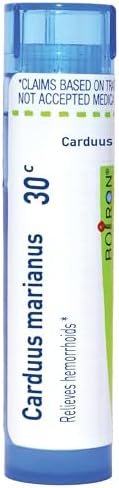
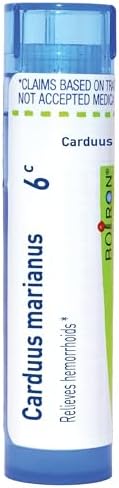

Source and Preparation
The homeopathic remedy is prepared from the ripe seeds (Fructus silybi / Semen
cardui-mariae) of the Milk Thistle plant, which are macerated in diluted alcohol and
allowed to stand for 8 days in a cool, dark place before being filtered. The
resulting liquid forms the Mother Tincture (Q), which is then potentized into
various dilutions through the standard homeopathic process of serial dilution and
succussion.
The seeds of Silybum marianum are rich in:
- Silymarin — a complex of flavonolignans responsible for powerful liver-protective
(hepatoprotective) action - Saponins — glycosides with anti-inflammatory and liver-protecting properties
- Flavonoids — potent antioxidants that combat oxidative stress in liver tissue
- Silybin, Silychristin, Silydianin — key active sub-components of silymarin
- Alkaloids — the alkaloid content carries the primary medicinal effect both in
crude and dynamic (potentized) form
Research published in the International Journal of Homoeopathic Sciences has confirmed
that potencies of Carduus Marianus (12X, 30, 200, 1M) significantly reduce
paracetamol-induced hepatic damage in laboratory studies, providing scientific
validation for its classical use.
Constitutional Type / Patient Profile
Identifying the correct Carduus Marianus constitution is essential for effective
homeopathic prescribing. The typical patient requiring this remedy presents with:
Physical Appearance
- Earthy, sallow, or yellowish-grey complexion — characteristic of liver dysfunction
- Dim eyes and associated visual dullness
- Hardness of hearing — noted in classical literature, especially in Miner’s Disease
- Yellowish discoloration of the face and skin (jaundiced appearance)
- Weak upper lip and general muscular flaccidity
Mental and Emotional Profile
- Melancholic and despondent temperament — joyless, forgetful, hypochondriacal
- Forgets what he has just intended to do — impaired short-term memory
- Aversion to company — wants to be left alone
- Irritability and easy anger — gets furious quickly
- Joyless disposition — cannot enjoy life due to persistent physical suffering
- Despondency linked to chronic illness
General Constitution
- Bilious constitution — prone to liver, gallbladder, and digestive complaints
- History of alcohol abuse, especially beer
- Persons in occupations with toxic exposure — miners and those working in dusty
environments (Miner’s Disease / “Bergsucht”) - Tobacco addiction combined with varicose conditions
- Individuals with a tendency to portal congestion and hemorrhoidal conditions
- Loss of appetite even for favorite foods and tobacco — a strong characteristic
Key Uses of Carduus Marianus
The clinical scope of Carduus Marianus is vast, with its primary action on the hepatic
and portal system. Below are all major indications organized by body system.
1. Liver Disorders — Primary Sphere of Action
This is the undisputed primary indication of Carduus Marianus. It is the foremost
liver remedy in homeopathy, covering:
- Liver enlargement (Hepatomegaly) — specifically enlargement in the transverse
direction (distinguishing it from Chelidonium, whose enlargement is more vertical) - Jaundice — all types, including obstructive, infective, and alcoholic jaundice;
characterized by yellowing of skin and mucous membranes - Hepatitis — inflammation of the liver with stomach spasms, contractive pains,
vomiting, cold rising from chest to throat, and shooting pains in the right abdomen
spreading to the back or shoulder - Liver cirrhosis — chronic scarring and hardening of liver tissue
- Fatty liver disease — heaviness and dull pain in the liver region from fatty
deposits - Liver congestion — fullness and soreness in the liver, with a sense of pressure
in the region - Portal congestion — the most distinctive indication; all complaints originate
from disturbed portal circulation - Liver affections associated with lung affections — an important and unique
clinical feature (Phatak’s Materia Medica) - Alcoholic liver damage — particularly from abuse of beer (a keynote
indication of this remedy) - Haemorrhages connected with hepatic disease — a consistent indication across all
classical authorities
2. Gallbladder and Bile Disorders
- Gallstones (Cholelithiasis) — Carduus Marianus is known to establish a healthy
flow of bile and break up the tendency to gallstone colic - Disturbed bile secretion — sluggish bile flow causing indigestion and
malabsorption of fats - Clay-colored or pale stools — indicating blocked or insufficient bile output
- Bitter taste in the mouth — a persistent keynote of liver and bile disturbance
- Biliary colic — cramping pain associated with gallstone movement
3. Spleen Disorders
- Inflammation of the spleen (Splenitis) — with pain in the splenic region, worse
on inspiration and stooping - Enlargement of the spleen (Splenomegaly) — so enlarged that the spleen and liver
together seem to fill the abdomen (a striking classical indication from Burnett’s
cases) - Stitches in the splenic region — sharp, stabbing pains worse on breathing in
- Hemoptysis accompanying splenic complaints — expectoration of viscid, lumpy mucus
with hepatic and splenic pain
4. Digestive Complaints
- Nausea, retching, and vomiting — vomiting of green acid fluid or blood; sometimes
vomiting of green substances with pain in the left side near the spleen - Aversion to salt and salted meat — a characteristic food aversion
- Bitter taste — persistent bitterness in the mouth throughout the day
- Flatulence and bloating — distended stomach with excessive wind and constant
rumbling - Gastric catarrh — inflammation of the stomach lining with mucus coating on the
tongue - Dyspepsia — indigestion, especially after liver-related complaints
- Constipation alternating with diarrhea — stools hard, knotty, and difficult to
pass; bright yellow stools or clay-colored stools - Relaxed stomach mucous membrane causing flatulence and clay-colored diarrhea
- Stomach spasms with contractive, pressive pains
5. Vascular Complaints — Varicose Veins and Hemorrhoids
- Varicose veins — one of the most remarkable spheres of action; incidentally cured
“colossal” varicose ulcers during liver treatment (Windelband’s clinical cases) - Varicose ulcers — chronic skin ulcers over varicose veins, especially in the
legs - Swollen veins of the legs — associated with liver congestion and portal
hypertension - Hemorrhoids (Piles) — hemorrhoidal flux dependent on portal congestion; burning
pain in the anal region - Rectal prolapse and rectal complaints — including rectal cancer in some advanced
clinical indications - Hemorrhoidal flux with metrorrhagia — from the same portal congestion basis
6. Hemorrhages
- Epistaxis (nosebleed) — habitual nosebleed, especially in psoric young persons;
a sudden and profuse nosebleed followed by great relief (a striking keynote) - Hemoptysis — coughing up blood, particularly when associated with liver and
spleen affections - Metrorrhagia — abnormal uterine bleeding linked to portal derangement
- Hemorrhoidal bleeding — from piles related to liver congestion
- Hemorrhages in typhoid — a specific classical indication
7. Female Reproductive Complaints
- Menstrual irregularities — both excessively heavy menstrual flow and abnormally
light flow - Chronic uterine hemorrhage — when there is an underlying issue of portal
derangement and liver dysfunction - Metrorrhagia — abnormal bleeding between periods, linked to pelvic and hepatic
congestion
8. Respiratory Complaints
- Bronchitis — particularly when associated with liver involvement
- Dyspnea (breathlessness) — significant breathlessness and palpitation during
uphill exertion; a keynote in Miner’s Disease - Hemoptysis — expectoration of blood in lung disease secondary to liver and spleen
disorders - Pleurisy — inflammation of the pleura, when associated with liver disorders
- Phthisis pituitosa — a mucous form of pulmonary tuberculosis (noted in classical
texts as curable with Carduus Marianus)
9. Head and Neurological Complaints
- Dull, heavy frontal headache — with furred tongue and stupidity; typical liver
headache - Vertigo — tendency to fall forward; relieved by nosebleed (a unique modality)
- Contractive feeling above the eyebrows
- Burning and pressure in the eyes — associated with liver disturbance
- Neuralgia — nerve pain, particularly in liver-related conditions
10. Urinary Complaints
- Burning at the urinary meatus and urethra — particularly in liver-compromised
patients - Turbid, golden-yellow, acidic urine — characteristic appearance of liver-related
urinary changes - Gray, scanty, pale urine in more severe hepatic conditions
- Strangury — painful, slow, drop-by-drop urination
- Urinary calculi (stones) — particularly with liver and gallbladder involvement
11. Male Complaints
- Impotence due to alcohol abuse — specifically sexual weakness in men linked to
excessive alcohol consumption affecting the liver - Sexual complaints associated with liver and spleen disorders — loss of libido and
erectile weakness from systemic hepatic debility
12. Skin Conditions
- Varicose ulcers — chronic, non-healing skin ulcers over varicose veins
- Yellowish discoloration of skin — jaundiced complexion from liver disease
- Skin issues related to liver dysfunction — acne, rashes, and eruptions that
improve when liver function normalizes - Tingling and yellowish staining of the skin
13. General and Systemic Conditions
- Dropsical conditions — generalized fluid accumulation (dropsy / edema) depending
on liver disease or pelvic congestion - Debility — extreme physical weakness and fatigue, especially after eating, riding,
or on waking up - Influenza when the liver is affected — a unique and specific indication
- Miner’s Disease (Bergsucht) — occupational lung and liver disease in miners,
characterized by dim eyes, hardness of hearing, coated tongue, loss of appetite - Disturbance of sugar metabolism — implications in diabetes management
- Local muscular rheumatisms dependent on liver disease
- Sciatica — hip and sciatic pain, especially extreme pain in the hip joint
increasing on bending forward - Sweat on the forehead and back after meals
Benefits of Carduus Marianus
| Benefit | Description |
|---|---|
| Liver Protection (Hepatoprotective) | Shields liver cells from toxins, infections, and alcohol-induced damage |
| Bile Flow Regulation | Stimulates healthy bile secretion for better fat digestion |
| Anti-inflammatory Action | Reduces liver inflammation and swelling in hepatic and splenic regions |
| Antioxidant Properties | Flavonoids and silymarin combat oxidative stress in liver tissue |
| Liver Detoxification | Supports elimination of toxins and metabolic waste from the liver |
| Varicose Vein Treatment | One of the best remedies for varicose veins and chronic ulcers |
| Hemorrhoid Relief | Reduces hemorrhoidal flux from portal congestion |
| Gallstone Support | Promotes bile flow and reduces tendency to gallstone colic |
| Digestive Health | Relieves nausea, flatulence, constipation, and alternating diarrhea |
| Hemorrhage Control | Addresses bleeding from nose, lungs, uterus, and bowel linked to liver |
| Sugar Metabolism | Assists in regulating blood sugar in diabetic patients |
| Safe for All Ages | Suitable for children, adults, elderly, and (with guidance) pregnant women |
Carduus Marianus Q (Mother Tincture) – Uses & Dosage
Carduus Marianus Q (Mother Tincture) is the most widely used and most clinically
powerful form for direct hepatic and portal action. It is the standard starting point
for all liver-related prescribing with this remedy.
Key Uses of Mother Tincture (Q)
- Portal congestion — the most characteristic indication for the tincture
- Gallbladder stones — supporting the natural dissolution of small stones and
preventing colic - Jaundice — acute and chronic, with yellowish skin and bitter taste
- Liver cirrhosis — supporting regeneration and reducing hepatic inflammation
- Dropsy — generalized fluid accumulation from liver disease
- Varicose veins and varicose ulcers — for direct vascular action
- Hemorrhages linked to liver disease — epistaxis, hemoptysis, metrorrhagia
- Detoxification in patients with alcohol abuse history, especially beer
Dosage of Carduus Marianus Q
Standard Dose: 5–10 drops of Mother Tincture in half a cup of water,
two to three times daily, for 3 months or as directed by a qualified homeopath.
For adults: 10–20 drops diluted in water, three times daily.
For children: 5–10 drops diluted in water, three times daily.
Always maintain a 30-minute gap from food, beverages, coffee, and strong-smelling
substances. Use under medical supervision.
Carduus Marianus 30 – Uses & Dosage
Carduus Marianus 30C is the most commonly prescribed potency for routine hepatic and
digestive complaints in clinical homeopathic practice.
When to Use 30C
- Mild to moderate liver complaints — early-stage hepatitis, mild jaundice, liver
heaviness - Routine digestive disorders — nausea, flatulence, alternating constipation and
diarrhea linked to liver - Varicose veins in the early or moderate stage
- Hemorrhoids (piles) with bleeding and burning, associated with liver congestion
- Epistaxis (nosebleed) — habitual nosebleed in young persons
- Headache and vertigo with liver origin
- Respiratory complaints (bronchitis, dyspnea) when liver is involved
- Suitable for sensitive patients, children, and the elderly
- Cardiac asthma with liver involvement
Dosage of Carduus Marianus 30
Standard Dose: 2–3 drops of dilution directly on the tongue or in water,
three times daily, continued for up to 3 months. Reduce frequency as improvement
occurs.
Carduus Marianus 200 – Uses & Dosage
Carduus Marianus 200C is indicated for more established, chronic, or deeper
liver-related conditions where the constitutional picture of the remedy is clearly
present.
When to Use 200C
- Chronic hepatitis and liver cirrhosis not responding adequately to 30C
- Established jaundice with deep yellowish complexion and constitutional
involvement - Chronic gallbladder disease — recurrent gallstone colic and sluggish bile
- Long-standing varicose ulcers — chronic, non-healing leg ulcers over varicose
veins - Chronic hemorrhoids with persistent rectal complaints linked to portal congestion
- Dropsical conditions from chronic hepatic disease
- Chronic female complaints — metrorrhagia and uterine hemorrhage from portal
derangement - Patients with the full constitutional picture — melancholic, joyless, bilious,
with earthy complexion and hepatic symptoms
Dosage of Carduus Marianus 200
Standard Dose: 2–3 drops or pills, once or twice daily, or once weekly
for deeper constitutional action. Observe carefully — do not repeat too frequently
at this potency.
Carduus Marianus 1M – Uses & Dosage
Carduus Marianus 1M is the highest commonly used potency of this remedy and is
reserved for deep constitutional prescribing in long-standing, treatment-resistant
hepatic and portal disorders.
When to Use 1M
- Deep constitutional liver pathology with the full Carduus Marianus picture —
bilious constitution, melancholic temperament, earthy complexion, all hepatic symptoms - Chronic, advanced liver cirrhosis with widespread constitutional involvement
- Long-standing portal hypertension — varicose veins, hemorrhoids, and fluid
accumulation not responding to lower potencies - Chronic, recurrent hemorrhages from liver disease — epistaxis, hemoptysis,
metrorrhagia - Miner’s Disease — long-standing occupational lung-liver pathology
- Patients whose condition has been chronic for years with a clear constitutional
match
Dosage of Carduus Marianus 1M
Standard Dose: A single dose (2–3 pills or drops), repeated only when
symptoms clearly relapse — typically after several weeks to months. Always
prescribed and supervised by a qualified homeopath.
Potency Comparison Table
| Potency | Best Suited For | Frequency |
|---|---|---|
| Q (Mother Tincture) | Direct liver action, portal congestion, gallstones, jaundice, cirrhosis, dropsy | 2–3 times daily |
| 30C | Mild–moderate liver, digestive, vascular, and hemorrhoidal complaints | 3 times daily |
| 200C | Chronic liver disease, established constitutional picture, long-term varicose & hemorrhoid issues | Once daily to weekly |
| 1M | Deep constitutional, advanced chronic liver pathology, long-standing portal hypertension | Single dose; repeat only on relapse |
Modalities (Aggravation & Amelioration)
Symptoms Worsen With (Aggravation)
- Beer and alcohol — the most prominent aggravating factor; a keynote of this remedy
- Lying on the left side — liver stitches and pains worsen in this position
- Motion — especially movement aggravates liver and abdominal complaints
- Touch and pressure on the liver region — soreness and pain increase
- Eating — fatigue and digestive symptoms worsen after meals
- Cellars and damp environments — particularly relevant in Miner’s Disease
- Stooping forward — worsens stitches in the splenic region; hip joint pain
increases on bending forward - Inspiration (breathing in) — aggravates stitches in the splenic region
Symptoms Improve With (Amelioration)
- Rest — lying quietly reduces pain and discomfort
- Nosebleed — vertigo is remarkably improved by a profuse nosebleed (classical
keynote from Clarke’s Materia Medica) - Open air — relief from fresh, cool air
- Gentle warmth — warmth reduces some of the chilliness associated with liver
disease
Relationship with Other Remedies
Understanding how Carduus Marianus relates to other remedies improves clinical
prescribing outcomes:
Complementary Remedies
- Chelidonium Majus — the most important complementary liver remedy; Chelidonium
covers right-sided liver pathology with right shoulder pain; Carduus covers more
portal and splenic involvement - Chionanthus — for liver with marked jaundice, clay stools, and portal stasis
- Podophyllum — for liver with diarrhea and prolapse conditions
- Bryonia — for liver with stitching pains, aggravation from motion, and dryness
Similar Remedies (Differentiation)
- Carduus Benedictus — stronger action on the eyes and sensation of contraction in
many parts; overlapping stomach symptoms - Mercurius Vivus — liver enlargement with profuse sweating and glandular
involvement - Aloe Socotrina — hemorrhoids and portal congestion; rectal symptoms predominate
- Nux Vomica — liver from overeating and alcohol; more irritability and
over-sensitivity
Antidoting Remedies
- Camphor — antidotes side effects or aggravations from Carduus Marianus
- If any adverse effects (vomiting or skin rash) appear, Camphor can be used to
antidote
Side Effects of Carduus Marianus
Carduus Marianus is considered safe and has no known significant side effects when
used in standard homeopathic dilutions. The classical literature and modern product
documentation both confirm:
- No harmful effects on the liver — despite being a liver remedy, homeopathic
dilutions do not damage the liver - No cardiac toxicity — safe for the heart
- No addiction — does not cause dependence
- No reported side effects in the medical literature for homeopathic potencies (30C,
200C, 1M)
However, the following points deserve attention:
- Temporary homeopathic aggravation — a brief, initial worsening of symptoms (such
as increased liver soreness, nausea, or temporary intensification of digestive
symptoms) may occur in sensitive patients after the first dose. This is a recognized
homeopathic response and typically subsides within 24–72 hours, followed by
improvement. - Mild drowsiness has been occasionally reported after taking the 200C dilution —
avoid driving or operating machinery until the effect is known. - Rare allergic reactions — possible in individuals with known sensitivity to the
Asteraceae (Compositae) plant family; discontinue use and consult a physician if this
occurs. - Mother Tincture caution — in patients already on conventional liver or gallbladder
medications, the tincture may interact; always inform both your allopathic physician
and homeopath. - If vomiting or skin rash occurs, Camphor can be used as an antidote.
Precautions and Warnings
- Always consult a qualified homeopath before starting Carduus Marianus, especially
for serious conditions like cirrhosis, portal hypertension, gallstones, or
hemorrhagic disorders. - Maintain a 30-minute gap between doses and food, drink, coffee, garlic, onion,
camphor, mint, or any strong-smelling substance. - Do not self-prescribe 200C or 1M potencies — these act deeply and require
proper case analysis by a qualified practitioner. - Avoid alcohol consumption while using this remedy — particularly beer — as
alcohol directly antidotes and aggravates its action. - Do not stop allopathic medications for liver disease without consulting your
physician. - Pregnant and nursing women should consult a qualified homeopath before use;
Carduus Marianus is generally considered safe in homeopathic dilutions during
pregnancy. - Medication users — Carduus Marianus may interact with conventional liver
medications; always disclose all medications to your healthcare team. - Store in a cool, dry place away from direct sunlight, heat, and strong odors.
Keep in original packaging; keep out of reach of children. - If symptoms persist, worsen, or new symptoms appear, discontinue and seek
professional medical advice immediately. - This remedy is for supportive and complementary use — it does not replace
conventional medical treatment for severe liver disease, active hepatitis, or acute
conditions requiring emergency care.
Frequently Asked Questions (FAQs)
Q1. What is Carduus Marianus used for in homeopathy?
Carduus Marianus is primarily used for liver, portal system, spleen, and gallbladder
disorders. Its key uses include jaundice, hepatitis, liver cirrhosis, fatty liver,
portal congestion, gallstones, varicose veins, hemorrhoids, epistaxis, metrorrhagia,
bronchitis with liver involvement, Miner’s Disease, and dropsy from hepatic disease. It
also supports sugar metabolism and addresses debility linked to liver dysfunction.
Q2. Is Carduus Marianus the same as Milk Thistle?
Yes. Carduus Marianus is the homeopathic remedy prepared from Silybum marianum, which
is commonly known as Milk Thistle. The homeopathic preparation uses the ripe seeds of
the plant, which contain the active compound silymarin, well-known for its
liver-protective properties in both herbal and homeopathic medicine.
Q3. Which potency of Carduus Marianus is best for liver problems?
For direct, immediate liver support (jaundice, hepatitis, portal congestion,
gallstones), Carduus Marianus Q (Mother Tincture) at 5–10 drops in water, twice to
three times daily, is most commonly recommended. For routine liver and digestive
complaints, 30C is ideal. For chronic liver disease with a clear constitutional
picture, 200C or 1M may be used under professional guidance.
Q4. Can Carduus Marianus treat fatty liver?
Yes. Carduus Marianus is indicated for fatty liver disease, where patients experience
heaviness and dull pain in the liver region. Its silymarin-rich preparation supports
liver cell regeneration and reduces inflammation in fatty liver conditions. Use under
the guidance of a qualified homeopath alongside conventional medical management.
Q5. Is Carduus Marianus safe for long-term use?
When used in homeopathic dilutions (30C, 200C) as directed by a qualified homeopath,
Carduus Marianus is generally safe for long-term use without known adverse effects. The
Mother Tincture for long-term use should be monitored by a practitioner.
Q6. Can Carduus Marianus cure gallstones?
Carduus Marianus is known in homeopathy to establish a healthy flow of bile and break
up the tendency to gallstone colic. It may provide symptomatic relief and support in
gallstone conditions, but severe or large gallstones require conventional medical
evaluation and treatment.
Q7. What are the side effects of Carduus Marianus?
No significant side effects have been reported for homeopathic potencies. A temporary
aggravation of liver or digestive symptoms may occur initially. Rare allergic reactions
in Asteraceae-sensitive individuals are possible. The Mother Tincture may interact with
conventional liver medications.
Q8. What is the difference between Carduus Marianus and Chelidonium?
Both are major liver remedies. Carduus Marianus focuses on the portal system, spleen,
and transverse liver enlargement, with strong action on varicose veins, hemorrhoids,
and hemorrhages. Chelidonium acts more on the right lobe of the liver with vertical
enlargement, right shoulder blade pain, and clay-colored stools. A qualified homeopath
selects between them based on the complete symptom picture.
Q9. Can Carduus Marianus be taken during pregnancy?
Carduus Marianus in homeopathic dilutions is generally considered safe during pregnancy.
However, always consult a qualified homeopath or healthcare provider before taking any
homeopathic remedy during pregnancy or breastfeeding.
Q10. What is the keynote symptom of Carduus Marianus?
The most distinctive keynote is vertigo with a tendency to fall forward, relieved by
a sudden, profuse nosebleed. Other keynotes include: all complaints centered in the
liver and portal system; liver enlargement in the transverse direction; aggravation from
alcohol (especially beer); and the complete earthy, bilious, melancholic constitutional
picture with loss of appetite even for favorite foods.
Conclusion
Carduus Marianus stands as homeopathy’s most comprehensive and targeted liver,
portal, and spleen remedy — a plant-derived healing force whose clinical depth has
been validated by centuries of homeopathic use and increasingly supported by modern
phytochemical research on silymarin.
From its powerful action on the Mother Tincture (Q) level for direct liver
support — detoxification, bile regulation, jaundice, and portal congestion — to its
constitutional depth at 30C, 200C, and 1M for chronic liver disease, varicose
conditions, hemorrhages, and systemic hepatic debility, this remedy offers a holistic
and gentle path to hepatic restoration.
Its secondary actions on the vascular system (varicose veins, hemorrhoids),
respiratory system (bronchitis, hemoptysis), female reproductive system
(metrorrhagia), and sugar metabolism (diabetes) further cement its status as a
versatile, multi-system remedy — provided it is prescribed based on the complete,
individualized symptom picture under the guidance of a qualified homeopath.
Disclaimer: This article is for educational and informational purposes only. It
does not constitute medical advice. Always consult a qualified homeopathic physician
or licensed healthcare professional before starting, changing, or stopping any
treatment — especially for serious conditions such as liver disease, cirrhosis,
gallstones, or hemorrhagic disorders.
Keywords: Carduus Marianus 30, Carduus Marianus 200, Carduus Marianus Q, Carduus
Marianus 1M, Carduus Marianus uses, Carduus Marianus benefits, Carduus Marianus side
effects, Milk Thistle homeopathy, homeopathy for liver disease, Silybum marianum
homeopathy, Carduus Marianus dosage, homeopathic liver remedy, Carduus Marianus mother
tincture, Card-m homeopathy, jaundice homeopathy treatment